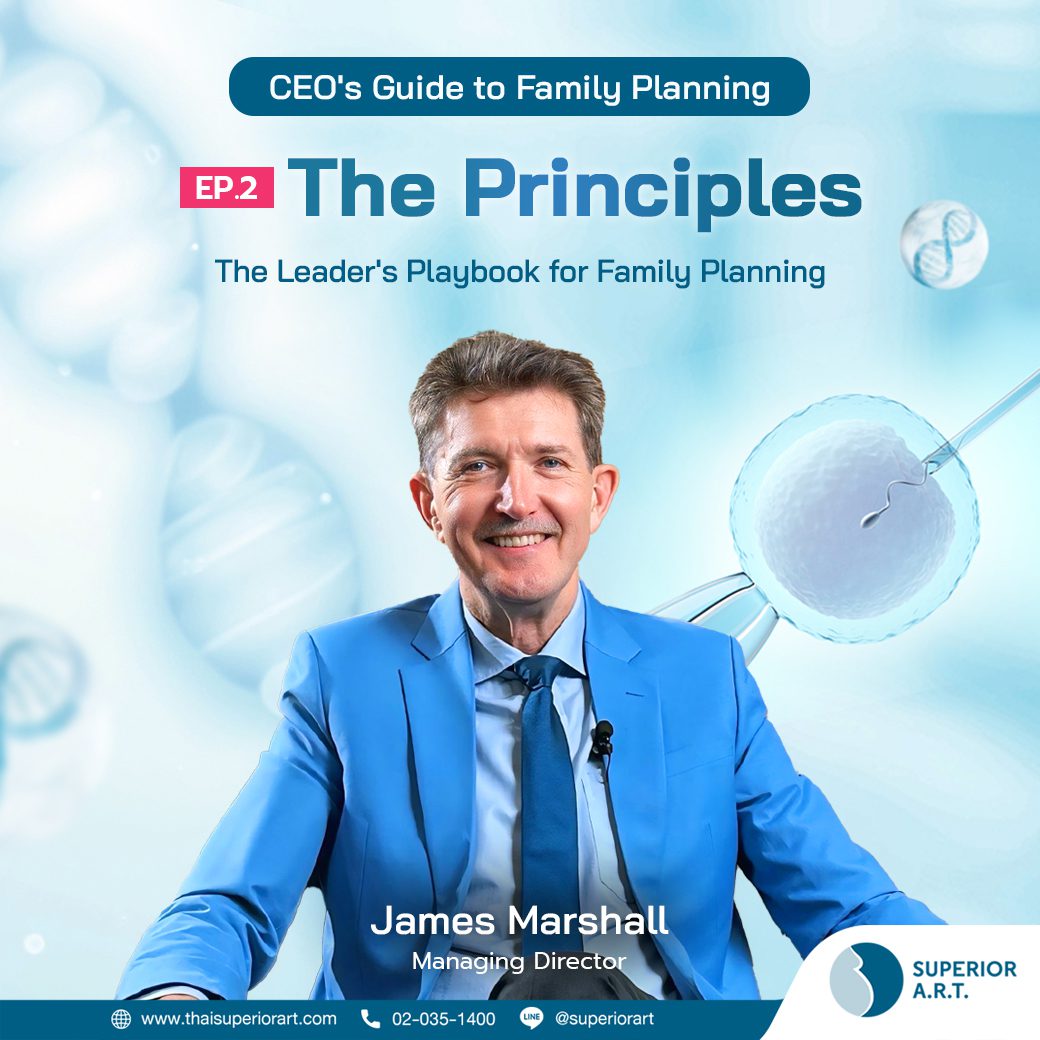
CEO’s Guide to Family Planning : EP. 5 The Next Move: “3 Steps to Your Confidential Roadmap”

Family Planning EP 5

Family Planning EP 5

The Next Move: “3 Steps to Your Confidential Roadmap”

Over the past four episodes, we’ve explored the philosophy of a meaningful legacy, the principles of leadership thinking, the portfolio of future options, and the human element behind every great decision.

Today, it’s time for the question to shift — from “Why?” or “How?” to “When?”

Because for true leaders, what separates success from dreams is simple: taking action.  And this is your personal Roadmap for making that first move.

🎯 Step 1 : Define Your Personal Vision

Before every meeting, you need a clear agenda.  Family planning is no different. Take 10 quiet minutes to reflect with your partner — and ask yourselves:

  • When do we want to have children?
  • How many children do we wish to have?
  • Will we conceive naturally, or consider Assisted Reproductive Technology?
  • What does our next 3–5 years look like — and when would be the right time?
  • What are our biggest concerns — age, finances, or privacy?

This is your Internal Strategy Session, helping you gain clarity before the journey begins.

🤝 Step 2: Schedule Your Executive Consultation

You don’t need to have all the answers — but you do need to know who to ask.

This step isn’t about deciding, it’s about opening a conversation with professionals who understand your executive lifestyle.

A Confidential Briefing with Superior A.R.T. is designed for absolute privacy and discretion. This isn’t just a clinic — it’s a strategic meeting room for your life. Here, you can:

  • Gain insights into all available options
  • Ask any question in a safe, private counselling room
  • Receive guidance from experts who act as your personal Family Advisor

📊 Step 3: Kick Off with Data — Not Drama

Once you’ve gained clarity, the next step is returning to the first principle: Data, not drama.

Start with:

  • A comprehensive Preconception Health Check-up for couples
  • Private testing that fits seamlessly into your schedule
  • An Executive Report that’s clear, concise, and precise
  • Strategic Recommendations from fertility specialists who align your plan with your life goals

This is about bringing real data to the table — so every step you take is grounded in truth, not assumptions, and executed with confidence.

🎯 The Final Chapter of “CEO’s Guide to Family Planning”

We’ve learned that family planning isn’t something to postpone “until the right time.”

It’s an essential part of being a complete leader — someone who applies the same strategic thinking that drives business success to life’s most meaningful project.

Your vision, strategy, risk management, and decisive leadership now serve a higher purpose — the happiness of your family. 💞

Because the return on this investment isn’t measured in financial statements, but in smiles, laughter, and lasting joy at home.

Superior A.R.T. — your trusted partner on the most important journey of your life. Professional. Understanding. Personal.

CEO’s Guide to Family Planning : EP. 4 The Human Element: “Comments from Leaders on Life’s Biggest Investment”

Family Planning EP 4

Family Planning EP 4

The Human Element: “Comments from Leaders on Life’s Biggest Investment”

We’ve talked a lot about strategy, but today I want to share conversations I’ve had with several leaders—insights that reflect the essence of life’s greatest investment: building a family.

  • 1️. A KPI That Changes Your Life
    Many leaders who once measured success by quarterly reports told me… the day their child called their name for the first time, or rode a bike independently—those were the real KPIs, in their life, far more meaningful than any other number they’d chased in their careers. Success now had a deeper, more profound dimension.
  • The Best Decisions Often Happen Outside the Boardroom
    Many say, “I wish I had started planning sooner.”, and those who did act early shared that doing a preconception health check, or Egg Freezing, in advance was the best personal strategic decision they ever made. It buys time and reduces risk from the uncertainties of the future.
  • 3️. A Journey That Makes Us More Complete Leaders
    In conversations with friends who have used Assisted Reproductive Technology, it often comes up that the journey is challenging but life-changing. It teaches us to understand our own vulnerabilities, let go of what we cannot control, and develop greater empathy for our teams and those around us.

💬 These conversations highlight one clear truth:
Building a family is the most intense life and leadership lesson—and it delivers the most rewarding returns.

💡 In the final episode of this series, we’ll move from ideas and stories to action with:
 The Next Move: Your Confidential Roadmap – The 3 First Steps

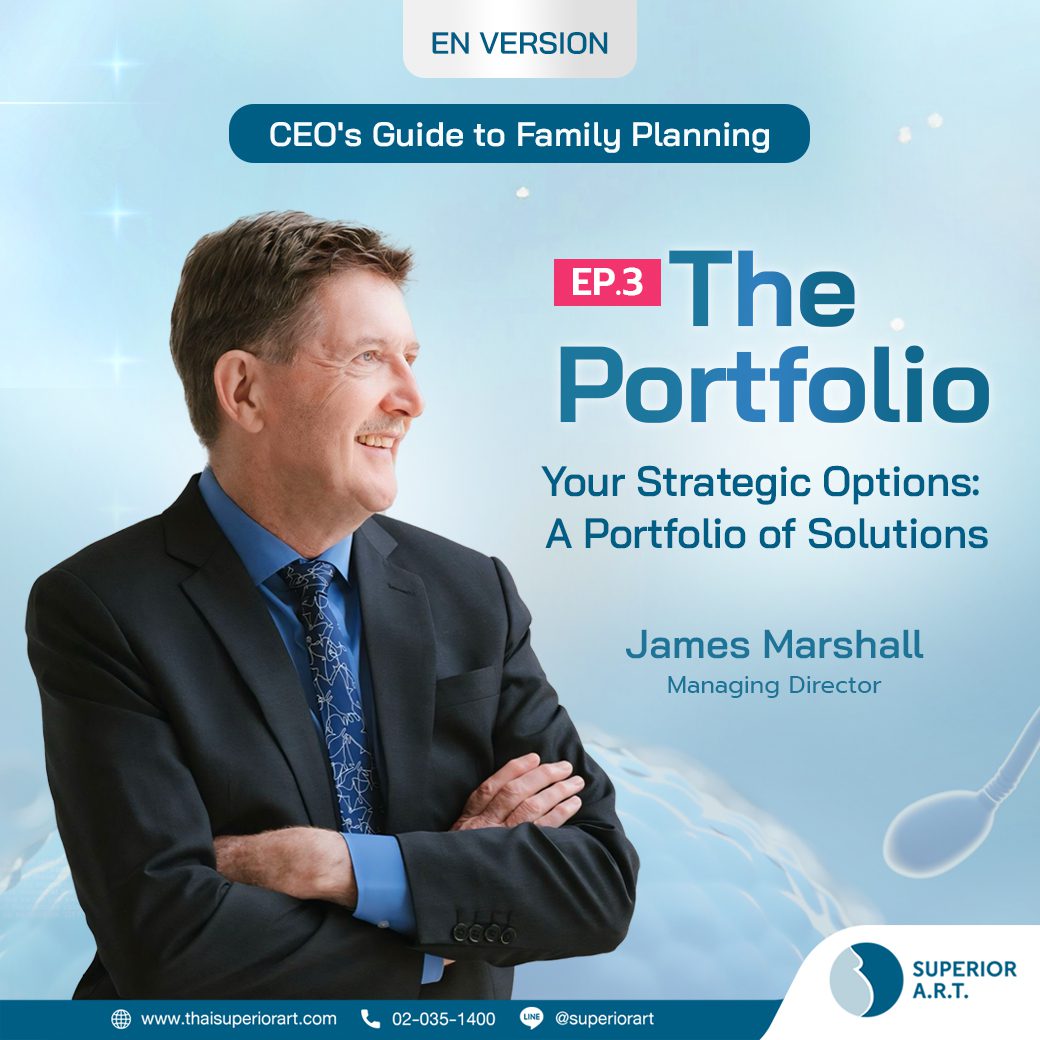
CEO’s Guide to Family Planning : EP. 3 The Portfolio: “Your Strategic Options: A Portfolio of Solutions”

Family Planning EP 3

Family Planning EP 3

The Portfolio: “Your Strategic Options: A Portfolio of Solutions”

“A good executive isn’t someone with only one option — it’s someone who knows how to create options for themselves.” 💡

Family planning works the same way as managing an investment portfolio. There’s no one-size-fits-all formula. What matters is having backup plans and being prepared for every scenario.

  • Some people start with a preconception health check-up, just like doing due diligence before expanding a business — to understand how prepared their bodies are, and what adjustments might be needed.
  • Others choose to freeze their eggs between ages 28–35, to “buy time” and preserve egg quality at its peak — like a forward contract with their own future.
  • Some move directly into IVF/ICSI treatments, utilizing advanced technologies to maximize their chances — especially after 35 years of age, or when unique health factors require close attention.

We see these options as a three-tier portfolio:

  • Foundation — For those just starting out
  • Optimization — For those who want to lock in future opportunities
  • Precision — For decisions that demand the highest accuracy

One thing I’ve learned as an executive: time cannot be renewed like money. The longer you wait, the higher the hidden “cost” of procrastination.

Waiting to do ICSI at age 40 may “cost” — time, money, emotion, up to three times the “cost” compared to doing Egg Freezing at age 30. That’s the Cost of Delay no one wants to pay.

👨‍⚕️ At Superior A.R.T., we understand the leadership mindset. We’re not just a medical provider, but a strategic partner in your life planning — with Comprehensive Care, Flexible Scheduling, Clear Communication, and an approach to care that treats every patient as part of the same team.

Because the best decisions come from having complete information.
And if today you’re ready to begin — Reach out via ✅Line: @SuperiorART

In the next episode, you’ll hear directly from executives who’ve walked this path — proof that having a child is not an obstacle to success, but the reason that makes success truly meaningful. 💙

CEO’s Guide to Family Planning : EP. 2 The Principles: “The Leader’s Playbook for Family Planning”

Family Planning EP 2

Family Planning EP 2

The Principles: “The Leader’s Playbook for Family Planning”

In business, leaders don’t wait for problems to arise before taking action. They plan, allocate resources, define objectives, measure outcomes, and manage risks in advance. Yet when it comes to having children, many overlook even the most basic framework for planning.

In the previous article, we discussed how a child can represent the highest form of Emotional ROI. Today, let’s start shaping a Playbook—a strategic guide for one of the most long-term investments in life: Family.

📊 Principle 1: Know Your Numbers Before Entering the Field (Data, Not Drama)

You’d never enter a new market without proper due diligence, knowing the data. So why would you plan to start a family without knowing your own biological data? These are your biological balance sheets:

  • AMH (Anti-Müllerian Hormone): Indicates ovarian reserve
  • FSH / LH / Estradiol: Reveal egg quality and ovulation health
  • Sperm count and motility: Critical male fertility indicators
  • Other blood markers: e.g., vitamin D, thyroid hormones, immune status

Preconception health screening for couples is like running due diligence on your body’s true reproductive potential. It provides real data, not just hope—and helps reduce the risk of acting too late.

⏱ Principle 2: Master the Timeline Like You Master Your Business Roadmap

In business, we know market entry timing is key to success. Likewise, in life, fertility timing plays a central role in determining reproductive outcomes.

In business, we understand that market entry timing can determine the success or failure of a strategy. In life, fertility timing plays a similar role in determining your success in starting a family. Here’s what that timeline looks like:

  • Ages 25–35: The Prime Window  → This is the golden period for fertility, with the highest natural conception rates.
  • Ages 35–40: The Strategic Phase  → Fertility begins to decline more noticeably. This is the time to get proactive—test, plan, and consider assisted options like egg freezing or IVF.
  • Age 40+: The Critical Phase  → Natural fertility drops significantly. Advanced reproductive technologies like ICSI and embryo screening become essential tools.

Egg Freezing allows you to “lock in” your biological potential (egg quality) in advance. It’s like purchasing an investment option—preserving your right to act when the timing is right, without losing the value you have today.

🤝 Principle 3: Build the Right Team—Don’t Just Patch the Problem (Assemble Your A-Team)

The people around you are key variables in building a strong family foundation:

  • Your life partner: Not just someone you love—but your co-founder in life
  • Fertility specialists: Your strategic advisors, offering data-backed, personalized planning
  • Technology: ICSI, PGT, Egg Freezing—tools that must be carefully chosen to maximize success

👨‍⚕️ At Superior A.R.T., we don’t just interpret test tubes and lab results—we understand the full context of your life. We act as your strategic partner, not just a medical clinic, working with you to craft a precise Plan A that covers both your health and your long-term future.

📘 A great Playbook is not something written after a crisis—it’s designed intentionally ahead of time, with solid data, the right resources, and clearly defined goals.

Coming up next: I’ll break down your strategic family-building portfolio, compare the pros and limitations of each option—in a format you’re familiar with: the business case. So you can make informed, confident decisions—on your terms.

CEO’s Guide to Family Planning : EP. 1 The Philosophy: “Beyond the Boardroom: Your Legacy is Your Greatest Asset”

Family Planning EP 1

Family Planning EP 1

The Philosophy: “Beyond the Boardroom: Your Legacy is Your Greatest Asset”

Many executives think they are masters of strategy, that they can forecast market trends five years ahead, plan precise expansion strategies, and interpret financial statements with clarity and depth.

But few ever pause to ask themselves a simple question:

Is this a silent blind spot in the life of a C-suite professional?

Family planning often falls to the bottom of the priority list—deferred for reasons like “it’s not the right time yet.”, “let’s wait until the business is better.” or “once I get that promotion…” But we tend to forget that: “Our bodies don’t wait for project approvals, for promotions, for that elusive ‘right time’.” Biology moves forward in real time. And time is the one resource that cannot be negotiated.

If you understand the importance of strategic timing when launching a new product or entering a new market, you can likely appreciate that timing is just as crucial when it comes to your personal life—especially decisions about starting a family.

Technologies like Egg Freezing and ICSI aren’t just solutions to problems. They’re tools to manage biological flexibility—giving you the option to postpone the decision without shutting the door on future possibilities.

From my perspective, a child is not merely a business successor, but a life legacy—one that delivers Emotional ROI far greater than anything measurable in a cash flow statement.

At Superior A.R.T., we don’t just look at hormone levels or lab results.
We see the bigger picture—understanding the life of a leader who needs a precise Plan A, without sacrificing what matters most on a personal level.

In the next article, I’ll explore how the ‘Principles of Executive Decision-Making Frameworks’ can be applied to family planning, much like how you build a roadmap for business growth.

Because being a leader isn’t just about teams and numbers—
It’s about intentionally shaping the future in every dimension of life.

What is Preimplantation Genetic Testing (PGT) and how can PGT help you?

Preimplantation Genetic Testing (PGT) is performed in conjunction with an In Vitro Fertilization (IVF) cycle to test parts of the embryos genetics and to select embryos with the highest likelihood of resulting in a healthy on-going pregnancy.

1. Types of PGT?
2. Why Do PGT Testing?
3. How is PGT Performed?
4. Preimplantation Genetic Testing for Aneuploidy (PGT-A)
5. Preimplantation Genetic Testing for Monogenic Single Gene Defects (PGT-M)
6. Preimplantation Genetic Testing for Human Leukocyte Antigen (HLA) Matching (PGT-M-HLA)
7. Preimplantation Genetic Testing for Structural Rearrangements (PGT-SR)


1. Types of PGT?

There are various types of PGT available, depending on the requirements of the individual couples,

  • PGT-A (aneuploidy),
  • PGT-M (monogenic single gene disorders),
  • PGT-M (HLA) (a special subset of PGT-M for HLA Matching), and
  • PGT-SR (structural re-arrangements of chromosomes).

2. Why Do PGT Testing?

Chromosomes are the blueprints of our body and are important for healthy development. They are the structures in our cells that carry our genetic information (genes).

Chromosomal aneuploidy (wrong number of chromosomes) is the most common cause of miscarriage and implantation failure. Preimplantation Genetic Testing (PGT) is the only way to determine if an embryo is expected to be affected with chromosomal aneuploidy or a genetic condition prior to implantation and achieving a pregnancy.

So what are some of the reasons for doing PGT Testing?

  • Avoid embryos with chromosomal aneuploidy and thereby;
    • Improve Pregnancy Rates
    • Reduce Chances of Miscarriage
  • Provide an embryo of specific genetics (eg. certain sex)
  • Avoid embryos with a known familial genetic mutation and thereby avoid passing the familial disorder onto your children
  • Provide families with a child who is HLA-matched to an existing affected sibling.

At Superior A.R.T., it is our aim to provide families with the best chance of having a healthy baby. A team of IVF clinicians, nurses, scientists and support staff work to support you and your family along the IVF and PGT journey.

3. How is PGT Performed?

PGT is performed in conjunction with an IVF cycle. Following oocyte (egg) retrieval and fertilization, the embryos are cultured to be blastocysts (day 5 to 6 embryo), and a few cells are removed (biopsied) from the outer layer (trophectoderm) and are transferred to the Genetics laboratory at Superior A.R.T. for analysis. Superior A.R.T. genetic scientists have experience and expertise in the most current, state-of-the-art PGT techniques, offering the most accurate and comprehensive results.

4. Preimplantation Genetic Testing for Aneuploidy (PGT-A)

PGT-A determines if an embryo contains the normal number of chromosomes (euploid) prior to implantation and pregnancy. Transfer of a euploid embryo optimizes the success of an IVF cycle, increasing pregnancy rates and reducing the chance of miscarriage.

The indications for PGT-A include,

  • Advanced Maternal Age
  • Testing Previously Frozen Embryos
  • Repeated IVF Failures
  • Recurrent Pregnancy Loss
  • Require specific genetics or family balancing.

Superior A.R.T. offers testing for all 24 chromosomes, using Next-Generation Sequencing and state-of-the-art technologies with the capacity to test all the chromosomes.

5. Preimplantation Genetic Testing for Monogenic Single Gene Defects (PGT-M)

PGT-M tests for a specific known family genetic condition prior to implantation and pregnancy. These disorders can include autosomal dominant, autosomal recessive, and X-linked conditions. Doing PGT-M helps at-risk couples have a child free of their family’s genetic disorder. These single gene disorders are caused by an alteration (mutation) in a specific gene, and PGT-M is the only way to determine if an embryo is expected to be at risk of that genetic condition.

The indications for PGT-M include,

  • Couples with an individual or a family history of a genetic condition and therefore at risk of passing it on to their children
  • Families with a child affected by a disorder treatable by stem cell transplant. (see PGT-M (HLA))
  • Couples Identified to be carriers with a risk of having children with a genetic disorder

Superior A.R.T. has for more than 15 years been a premier provider of PGT-M in Asia. Superior A.R.T. can customize and develop novel tests as necessary, have never failed to provide a test for any known family genetic disorder, and have developed tests for more than 250 disorders. We can also perform testing for more than one single gene disorder and/or a chromosomal rearrangement on the same sample. An individualized family testing plan (“PGT-M Work-Up”) is developed for each couple, requires DNA samples from each partner and may require additional DNA samples from some family members selected according to a review of the family history.

PGT-M uses Next-Generation Sequencing, PCR based fragment analysis, and other state-of-the-art technologies such as Karyomapping. The choice of testing will depend on individual families and their disorder(s). Normally, PGT results are known within 10-14 business days.

6. Preimplantation Genetic Testing for Human Leukocyte Antigen (HLA) Matching (PGT-M-HLA)

PGT-M (HLA) is the same as for PGT-M except than in addition to testing for a specific genetic disorder, the testing also identifies embryos that are HLA compatible with an existing child affected with certain blood disorders, treatable by stem cell transplant. Cord blood can be collected at birth and stem cells harvested. These Allogeneic haematopoietic stem cell (HSC) through transplantation represents the only curative option for leukemia and certain other genetic and non-genetic disorders (eg. thalassemia). The PGT-M (HLA) Work-Up includes creating a DNA fingerprint of the affected child’s HLA region, and then determining if the HLA region in an embryo is the same or different.

Superior A.R.T. is recognized as a successful leader in PGT-M for HLA-Matching in Asia.

7. Preimplantation Genetic Testing for Structural Rearrangements (PGT-SR)

PGT-SR identifies structural chromosomal abnormalities caused by rearrangements, including translocations, inversions, deletions and duplications, prior to implantation and pregnancy.

Since, as previously stated, chromosomes are the blueprints of our body, the structures in our cells that carry our genetic information (genes), any re-arrangement, loss (deletion) or gain (Insertion), may cause failed implantation, miscarriage, or a child born with a disorder.

Typically, the couple has a previously identified translocation, inversion, or other chromosomal rearrangement, and these tests identify any chromosomal abnormalities in an embryo, prior to achievement of a pregnancy.

PGT-SR for chromosomal rearrangements uses Next-Generation Sequencing and other state-of-the-art technologies. The method detects not only unbalanced embryos, but also identifies aneuploid embryos. For smaller fragments, the development of a special tests may be required.

Conclusion

Superior A.R.T. is a recognized leader in Asia in the field of assisted reproductive technologies and Preimplantation Genetic Testing (PGT), providing assistance and successful healthy pregnancies for thousands of couples and families.

Global Methods of Sex Selection

Global Methods of Sex Selection

Global Methods of Sex Selection

Sex selection is used globally for a number of reasons. It may be for medical reasons, such as to avoid and prevent severe sex-linked diseases inherited in your family, or for non-medical reasons, such as to balance your family, to have another baby of the same sex as a deceased child, cultural values, etc. There are a variety of sex-selection methods, but which ones are effective, which are safe, which are reliable, etc.?

               In this article, Superior A.R.T., a leading fertility clinic, summarizes some information on some global methods for sex selection. These can be grouped into three types, Natural Methods, Sperm Sorting Methods, and Preimplantation Genetic testing Methods (PGT).

               Today, we’ve got the answers for you. Let’s find out.

  1. Natural Sex Selection Methods
  2. Sperm Sorting Methods
  3. The PGT (Preimplantation Genetic Testing) Method with IVF/ICSI

1. Natural Sex Selection Methods

Natural methods that rely on changes in the physical or physiological conditions, and include Shettles technique, Whelan Method, Billings Ovulation Method, pre-conception diet, and gender selection kits such as GenSelect and Smart Stork. They rely on timing of intercourse, the vaginal environment, changing diet, and ingestion of supplements.

  • Timing methods aim to affect the sex ratio of the resultant children by having sexual intercourse at specific times as related to ovulation. They also often require the woman keep ovulation tracking records.  They may also suggest certain sexual positions as having an effect on the selection of sex. Studies have not been consistent about whether timing methods have any influence on the sex of the baby, with some showing no correlation and others showing just the opposite. These methods include the Shettles Method, the Whelan Method, and the Babydust Method.
  • Dietary methods require, as its name suggests, that the mother, and perhaps the father as well, eats a certain diet for a period of time prior to before conception, and that it will play a very influential role in whether she will conceive a girl or a boy. These methods often combine the timing of intercourse with dietary changes. While several studies have concluded that the combination of maternal diet with timing of intercourse is capable of increasing the probability of conceiving a girl, other studies have been less conclusive. There is also no systematic guide to which foods and supplements to take.
  • Special Supplements methods, such as GenSelect, use specially-formulated “nutriceuticals” in combination with dietary guidelines for mothers and fathers, intercourse timing aids, and vaginal environment adjustment instructions. These are proprietary products.

2. Sperm Sorting Methods

These include sperm sorting by gradient (eg. Ericsson’s method), various other sperm sorting techniques, and MicroSort.

  • Sperm sorting by gradient

These methods rely on passing the sperm through a column containing a gradient of either various additives, or of varying concentrations. They rely on the small difference in mass between the X and the Y bearing sperm to influence how far the sperm will penetrate the next layer. The different layers become concentrated with sperm of one particular sex.

The Ericsson method uses higher concentrations of sperm of the desired sex to increase the likelihood of conceiving that sex. When used to increase the likelihood of a female child, studies have resulted in between 70% and 80% female children. When used to increase the likelihood of a male child, studies have resulted in between 50% to 75% male children

  • Other sperm sorting techniques

There are several other sperm sorting techniques, such as swim-up which relies on supposed difference in the speed at which X and the Y bearing sperm swim to concentrate the sperm. These methods lack any scientific support.

  • MicroSort

MicroSort is an advanced technique that sorts sperm “in vitro” by flow cytometry. Semen is labeled with a fluorescent dye. As the X chromosome is larger (i.e. has more DNA) it will absorb a greater amount of dye than its male (Y-chromosome bearing) counterpart. During flow cytometry, X spermatozoa fluoresce brighter than Y- spermatozoa, and this is used to separate them. It does not completely separate them and each sample is tested and a percentage concentration given. The technology was trialed on humans in the US and claimed up to a 90% success rate. However, it was banned for human use by the USFDA and the laboratories moved to other countries.

Although the natural sex selection methods are free and can bring a miracle to many couples and families from time to time, it is still undeniable that its success and certainty is almost impossible to predict.

3. The PGT (Preimplantation Genetic Testing) Method with IVF/ICSI

If now you are asking then what is the most effective, reliable, and safest sex-selection technique, then the answer is PGT or Preimplantation Genetic Testing together with IVF.

Preimplantation Genetic Testing is a technique used to identify known family genetic disorders and/or general chromosomal defects in embryos created through an In Vitro Fertilization (IVF) cycle. Eggs are fertilized with the partner’s sperm and grown in culture until day 5 or day 6 “blastocyst” stage. A few cells are biopsied from each embryo and can be tested using advanced genetic techniques such as Next Generation Sequencing (NGS).

This method accurately detects the embryos chromosomal complement including the sex chromosomes and therefore the embryo’s sex.

The method is not only very reliable and accurate, it also allows only the transfer of an embryo with a normal chromosomal number, the healthiest embryo, and therefore healthier pregnancies and less risk of defects in the fetus or the newborn baby.

However, because the PGT Method with IVF is the most expensive approach of all, many couples often opt for one of the other cheaper options instead. You should still always consult with a specific IVF clinic of your choice, as many may offer a discount, a promotion, or a special package that could be very affordable to you.

Summary

While the natural sex selection methods are by far the simplest and cheapest (many free of charge), and may be most suitable for couples who are just simply enjoying the idea of maybe getting a boy over a girl or a girl over a boy, their unpredictability and uncertainty makes them unsuitable if you are seriously only wanting to conceive a child of a specific sex (eg. to prevent passing on your sex-linked genetic disease). In that case, only the assisted techniques are recommended, and the only truly accurate way is with using the PGT with IVF Method.

Additionally, if you have tried every natural way to get pregnant or to conceive a child for more than 1 year already, it is also a sign to start thinking about more advanced assisted approaches such as IVF/ICSI.  In Vitro Fertilization (IVF) is by far one of the world’s most proven and effective infertility treatments. For more information on what IVF is or what steps it includes, you can read it here.


About Superior A.R.T.

Superior A.R.T. was founded in 2007 by a group of leading Thai Infertility specialists in collaboration with Australian world leading fertility and A.R.T. treatment providers. Superior A.R.T is a renowned fertility clinic offering comprehensive fertility, IVF, IUI, ICSI, Egg Freezing, PGT, and genetic services by a team of experienced treatment providers and researchers specifically specializing in Assisted Reproduction Technology – A.R.T. Superior A.R.T. is committed to making your dream of having a healthy baby come true.

How to Find the best IVF Clinic: The 8 Most Important Factors to Consider

With so many IVF clinics to consider and choose from, you are probably wondering where you should start in finding the clinic best for you. You may have many questions on your mind e.g., what is a suitable IVF clinic, what factors should I consider, and which IVF clinic has the best reputation?

                    Of course, how you really feel about a clinic or its doctor will depend on your actual experience, you feelings while consulting and counseling with the doctors at the staff at the clinic. However, if you have prepared yourself,  equipped yourself with a checklist of what you should be looking for, then you are likely to have made the correct choice Here is our practical, fundamental guide to assist you to narrow down your choices when choosing what IVF clinic is best for you.

  1. Location and Environment

Where is the IVF clinic located? Is travelling there easy, convenient, safe, and suitable for your work or life schedule? IVF is a process that requires much dedication, time, and efforts from the patients, and you may need to visit the clinic frequently during the stimulation and monitoring process. For example, in the case of Thailand, if not travelling by car or taxi in order to avoid traffic delays, is the clinic located near any BTS or MRT station? Our clinic is located right in the heart of Bangkok and is only 15-minute walk from BTS Ploen Chit station and Central Embassy.

For patients who are travelling from abroad, then the dedication, time and effort is even more. At our clinic, patients who are from abroad may in most circumstances start the stimulation and monitoring with one of our affiliated doctors, or with a doctor of their own choosing, in their home country, then come to Bangkok only for the trigger injection and egg retrieval, shortening their stay to only about 4-8 days.

Apart from the transportation, it is also always wise to visit the clinic and assess its environment. Does the clinic’s atmosphere make you feel safe and comfortable, is it clean, does it make you feel relaxed while being there? These little things at the clinic can make the IVF process feel comfortable and relaxed for the patients

  • The Types and Variety of Treatments Offered

IVF is so far from merely the process of traditional IVF. A variety of infertility and genetic factors in the male and/or the female, may require other additional treatments and services in order to provide the best possible outcomes. Where your infertility issues are not severe, the doctors may advise you to try IUI first before proceeding with IVF. You may need ICSI instead of the traditional IVF for your fertilization, or the male may require PES/TESE to extract sperm, or Sperm MACS or PICSI to select the few good sperm? During the IVF cycle, you may also need a clinic which provides egg freezing to save your retrieved eggs for later use? After the IVF cycle, you will most likely to need a clinic which provides embryo freezing  to preserve your good embryos for later use. A good IVF clinic may also provide PGT services, genetic testing of embryos prior to transfer to the woman’s uterus, where patients require genetic screening of their embryos for a variety of reasons.

It boils down to basically that the clinics range of assisted reproductive services indicate how likely it will be that the clinic can support your needs through every step of your fertility treatment journey.

  • Cost and Affordability

Although most couples seeking IVF treatment are already aware that IVF is generally quite costly, it is still always wise to spend some time researching costs and searching for a clinic with a reputation of no hidden costs, that is open about the range of expenses, that will take time to explain the potential costs and the reasons why certain treatments may be suggested or recommended. Packages can be confusing and misleading, does the clinic take time to explain both what is included in any package, and what is not included?

  • Credentials and Success Rates

Every fertility clinic keeps their statistics, and if the clinics are transparent, trustworthy, and promising enough, they will be more than happy to show you how well they have been doing. Choosing a clinic with good success rates is always better than choosing one with a relatively poor record. Nevertheless, as HFEA (Human Fertilization & Embryology Authority) said, “if you’re comparing two or more clinics, you may want to consider the multiple other variables (cost, location, patient ratings) to find a clinic that meets all your needs and expectations rather than deciding on success rates alone.”

  • Equipment and Technologies

The chances of success in IVF go hand in hand with how much and how well a clinic invests in the quality of its equipment and in advances in technologies. The key is not just to solely focus on how “advanced,” “cutting-edge” or “latest” certain technology advertised by a clinic, but rather is it effective and suitable for your case? Many IVF clinics will promote how their latest technologies are, but their basic core functions and services are just as important, and so is the quality of the staff using the equipment.

At Superior A.R.T., we have our own onsite Embryology, Andrology, and Genetic laboratories, using the highest international standards in quality control. We use the Geri-Time-Lapse Incubator, the newest generation of time lapse incubators available, with a single high quality microscope camera system dedicated to each culture chamber, thus allowing detailed tracking of embryo development without the need for the plate or the embryos having to move. Each chamber is independently controlled and monitored, providing individualized, optimal culture conditions. The use of mini incubators increased the pregnancy rates as embryos have more stable conditions in which to develop. This technology is very critical and crucial to the process of embryo culture in IVF as embryos that can be transferred in the final step of IVF are required to reach the blastocyst stage. At Superior A.R.T., we also use Karyomapping, the latest technology for preimplantation genetic testing for monogenic disorders and HLA Matching. Karyomapping only requires days to a few weeks to complete a test workup, unlike other PGT-M tests which usually take months to finish, Karyomapping is considered highly accurate, with a greater than 95% reliability.

  • Qualifications and Experiences of Doctors

The qualifications and experience of the doctors at each IVF clinic will likely to be a major part of your decision-making. Do the doctors have the highest training possible in infertility and reproduction? Though it seems to have a fixed set of steps, IVF treatment can require very subtle changes between patients to achieve the best result. A good IVF clinic should design a personalized treatment plan for each patient. Each patients response to medications is different, and the process of stimulation and egg retrieval needs to be closely monitored to avoid any complications. Making an appointment and talking to the doctor in person may give you a better understanding whether it is the right IVF clinic for you. If he or she is a good infertility clinician, it will usually not take long to be obvious.

  • Quality of the Staff

While the doctor will play a big part in your clinical experience and journey, the fertility team of a clinic will also play a huge role in your IVF cycle. You will likely work with the clinic for a few weeks, with many questions and issues requiring someone at the clinic to help you. Do the staff take time to answer your questions? Are they courteous and helpful to you? Do you feel comfortable with them, or do you feel quite stressed or, in the worst case, neglected?  

Are the scientists experienced and fully trained? Is there ongoing training, competency checks, etc. Have the management of the laboratories had lengthy experience? Is there any scientific literature to indicate that experience? Do they engage in knowledge sharing and quality assurance testing?

  • Reviews

Nothing can you help you visualize better any service you haven’t yet experienced, than the reviews of other patients who have been through the journey already. This may be difficult if the clinic has no referrals or testimonials for you to review, although you may be able to find some on social media. Try visiting a clinic’s Facebook page and see how others react to their posts or comment on their treatments or services. Many good IVF clinics also often share the success journey of some of their patients as well. So, take time to do some research on it. However, it is important to note that reviews can also be very subjective. So, it is always wise and best to take every factor into consideration – especially by seeing, experiencing, and assessing the doctors and the clinic via a call or by an in-person meeting.

With all these factors in mind, we truly believe that you will be able to narrow down your choices for an  IVF clinic  that best suits all of your requirements.

About Superior A.R.T.

Superior A.R.T offers comprehensive fertility and genetic services in state-of-the-art Assisted Reproduction Technology (A.R.T.) Laboratories in Bangkok Thailand. Superior A.R.T. was founded in 2007 by a group of leading Thai Infertility specialists in collaboration with Australian world-leading fertility and A.R.T. treatment providers, Superior A.R.T is a renowned fertility clinic offering comprehensive fertility and genetic services by a team of experienced treatment providers and researchers specifically specializing in Assisted Reproduction Technology – A.R.T. Superior A.R.T. is committed to making your dream of having a healthy baby come true.

References

Twins in IVF: Understanding Multiple Pregnancies in IVF

A multiple pregnancy occurs when more than one embryo implants in the uterus lining and develops (dizygotic or fraternal twins), or when an embryo splits and two fetuses grow from the one embryo (monozygotic or identical twins). This can happen naturally or by an Assisted Reproductive Technology procedures such as IVF

Today, we will help you learn more about multiple pregnancies in IVF. Can’t wait to begin? Let’s get started.

How does a multiple pregnancy occur in IVF?

In IVF, a multiple pregnancy can occur when multiple embryos are selected and transferred back into a woman’s uterus. The multiple (instead of single) embryo transfer can lead to the implantation of more than one embryo in the woman’s uterus and cause a twin or multiple pregnancy. 

How likely is for one to have a multiple pregnancy in IVF? 

The chances for each woman to have a multiple pregnancy in IVF can vary depending on a variety of factors including a number of embryos she agrees to be transferred, her age, and her underlying cause(s) of infertility. The higher number of embryos transferred the more likely a multiple pregnancy, and the chance is increased the younger the woman is. One study shows that multiple-birth rates can be as high as 45.7% for women aged 20 to 29 years, while among women aged 40 to 44 years, the multiple-birth rate was less than 25% even with 5 embryos transferred. Direct consultation with your IVF doctor will help you more precisely and accurately know and understand your chances of a multiple pregnancy from IVF.

What should I do if I want to have a multiple pregnancy in IVF?

Having a multiple pregnancy in IVF is possible but is not without a string of major concerns. For couples who are considering having twins or multiple babies via IVF, we recommend you learn about the possible issues/complications of having a multiple pregnancy in IVF and directly consult with your IVF doctor. Some of the most common major issues from having a multiple pregnancy in IVF include:

  • The natural medical risks of a multiple pregnancy: There are many major complications including premature birth, low-birth weight, and in the worst case, fetal/infant death. The premature birth and low-birth weight can cause severe health issues in both long and short term to your babies and often require your babies to be cared in a neonatal intensive care unit (NICU) for a long time before being able to be taken home, which can be exhausting to you and your partner both emotionally and financially. Almost everything that can go wrong in a pregnancy, for both mother and foetus, is increased by a multiple pregnancy. 
  • The high cost of IVF and its emotional and physical turmoil: IVF is a special medical treatment, meaning it is costly and is emotionally and physically dedication, especially for a female partner who will have to go through every step of IVF starting from an ovarian stimulation to an embryo transfer. In addition, it is always important to note that one IVF cycle does not guarantee success and may require you to try again and again to finally achieve a pregnancy. So, if your only requirement for IVF is to try and get a multiple pregnancy then perhaps you should re-consider.

What should I do if I want to avoid having a multiple pregnancy in IVF?

To reduce your chances of having a twin or multiple pregnancy, you can opt for transferring only a single embryo at a time.

In the past, many IVF doctors would try to transfer as many embryos back into a woman’s uterus as possible to maximize the chance of pregnancy. But today, with advanced embryo culture techniques and other technologies available, such as Blastocyst Culture, Mini-Incubators, etc., a single embryo transfer has an impressively good success rate and less risk of all complications. To find out more about our blastocyst culture technology here. 

In addition, if you choose to transfer only one embryo, you still have the option to freeze and preserve those remaining embryos for later use. In the embryo freezing process, using Vitrification technique, your embryos will be frozen ultra-rapidly, so that the water molecules don’t have time to form ice crystals, and then the embryos are held in deep frozen storage. This storage, if in a high-quality, well-maintained laboratory with consistent, regular quality control and monitoring of the liquid nitrogen and the equipment, results in long-lasting, high-quality preservation of your embryos indefinitely. When you would like to get pregnant you don’t have to start your IVF cycle all over again, you can proceed by using a frozen embryo in a process commonly known as a Frozen Thaw Embryo Transfer (FET)

At Superior A.R.T. we have a “single blastocyst transfer” policy. That is, we recommend transferring a single blastocyst embryo, and will only transfer a maximum of two embryos where the doctor has assessed the patients’ medical condition and found them suitable.

One final question, can a single embryo transfer results in a multiple pregnancy? 

Though occurring rarely, such an incident is possible and is not a complication from IVF but rather another form of twin/multiple conception. In this conception form, instead of coming from two separate fertilized eggs, your twins were born from only one fertilized egg (a single embryo transfer). It was somehow divided or split into two embryos during its cell division process and proceeded to develop into two fetuses, commonly known as identical twins. Because coming from one fertilized egg, identical twins, therefore, share all of their genes, are the same sex, and often look exactly alike. 

About Superior A.R.T.

Superior A.R.T offers comprehensive fertility and genetic services in state-of-the-art Assisted Reproduction Technology (A.R.T.) Laboratories in Bangkok Thailand. Superior A.R.T. was founded in 2007 by a group of leading Thai Infertility specialists in collaboration with Australian world-leading fertility and A.R.T. treatment providers, Superior A.R.T is a renowned fertility clinic offering comprehensive fertility and genetic services by a team of experienced treatment providers and researchers specifically specializing in Assisted Reproduction Technology – A.R.T. Superior A.R.T. is committed to making your dream of having a healthy baby come true.

References

A Simple, Step-by-Step Guide to the IUI Process

In a previous article, we discussed IUI (Intrauterine Insemination), the relatively simple and affordable procedure, including what IUI is, when IUI is usually used, how safe is IUI, and how IUI works (read our introductory article about IUI here).

In this article, we will walk you through the whole procedure once again, but in step-by-step detail to help you better understand and prepare for your visit to our clinic. Can’t wait to start? Let’s begin.

  1. Your First Consultation 

When: Whenever you are ready to have an appointment

How long: 30-45 minutes 

Prior to any procedure, the first important step is for you  to consult with a fertility doctor at a reputable and experienced fertility clinic. Depending on your underlying causes of infertility, your doctor may ask the female to undergo some tests, such as an examination of your uterus and fallopian tubes, a hormonal evaluation, and other tests that may be necessary, and for the male to undertake a semen analysis. The goal of this first consultation is for your doctor to examine and review your overall physical condition and help you to decide if IUI is the best option for you. Patients with severe infertility may find IUI less effective than patients with mild infertility causes. 

This first session is also your opportunity to discuss your concerns about IUI, the process, the cost, and anything else you wanted to know. Use this opportunity to be comfortable and satisfied with the doctor, the clinic, and the options. A trustworthy fertility clinic and an experienced doctor should make you feel that you are in good and reliable hands, and that you can be certain that whatever you encounter, he or she will be able to advise the most proper and suitable solution with experience, competency, and knowledge.

  1. Ovarian Stimulation 

When: Day 2 or day 3 of your period

How long: 10 – 12 days

Once you have done your fertility assessments and decided to proceed, the first step of IUI is to decide on whether a natural cycle or a stimulated cycle is required. We may have to provide a level of stimulation to your ovaries to ensure you have a follicle to ovulate. Whether natural or stimulated, we will monitor the cycle and to determine the timing of the IUI.

Any stimulation drugs can be either injectable, oral, or combined, depending on the doctor’s evaluation of your physical and ovarian condition. During this time, you will be asked to come to the clinic every few days for around 9 to 12 days for blood tests and ultrasounds. The goal for the visits is to monitor how your ovaries are responding, how much your follicles or your eggs have grown, to adjust any medications if necessary, and to time the IUI procedure. You and your partner may be asked to abstain from a sexual intercourse or ejaculation for a few days prior to the IUI procedure.

Once a follicle is at least 18-20mm, and the uterine lining is at least 7mm, a “trigger shot” can be given to trigger ovulation. The IUI is scheduled for about 36 hours after the trigger medication is injected.

  1. IUI Process

When: 36 – 42 hours after a trigger shot

How long: 15-20 minutes 

36 – 42 hours after your trigger shot, you and your male partner will return to the clinic to finally begin the IUI process. During this stage, your male partner will provide a semen sample. Masturbation is the recommended method for semen collection as it will lower the chance of bacterial contamination which might be found in any bodily fluids. The sample will immediately be taken to the laboratory, left for 30 minutes to liquefy and then washed to remove debris, immobile sperm, and substances in the semen that can irritate your uterus or kill the egg. The highly concentrated sample of healthy sperm also increases the chance of achieving pregnancy. 

Once the sperm are washed and ready, your doctor will begin the final minor surgical procedure for IUI, starting by using a speculum to gently open your vagina and visualize your cervix. Once the vision is clear, your doctor will inject the sperm sample into your uterus using a long, thin, soft tube so that the sperm can swim into the fallopian tube allowing it to easily meet and fertilize the ovulated egg(s). The whole process is relatively painless, needs no anesthesia, and takes only 5-10 minutes to finish. After the IUI procedure is complete, you will need to lay down and take rest for around 30 minutes before being discharged.

  1. Pregnancy Test

When: 14 days after the IUI procedure

How long: 2-3 minutes 
About 14 days after the IUI procedure, you can take a pregnancy test at home or at the clinic. The doctor may ask you to come back to the clinic for a blood test to detect the level of the pregnancy hormones. If the first IUI cycle is not successful, don’t be discouraged yet. You can try again for up to 3-4 rounds or, in some cases, up to 6 rounds depending on how young you are. If after 4 – 6 rounds, pregnancy still doesn’t occur, your doctor may suggest you to consider other treatment options such as IVF or ICSI. After IUI, you can continue normal daily activities including sexual intercourse.

Superior A.R.T. is committed to making your dream of having a healthy baby come true.

References

  • https://www.fertilityanswers.com/how-many-iuis-should-you-do-before-moving-on/#:~:text=For%20women%20under%2035%2C%20our,a%20profound%20impact%20on%20fertility
  • https://www.healthline.com/health/intrauterine-insemination-iui#procedure
  • https://thaisuperiorart.com/news-and-articles/4030/